Malaysian Original · Food, family and railway heritage

Kluang Rail Coffee

Kluang, Johor

How a railway canteen founded in 1938 made coffee, kaya toast and a Johor platform part of one family's inheritance—and one town's identity.

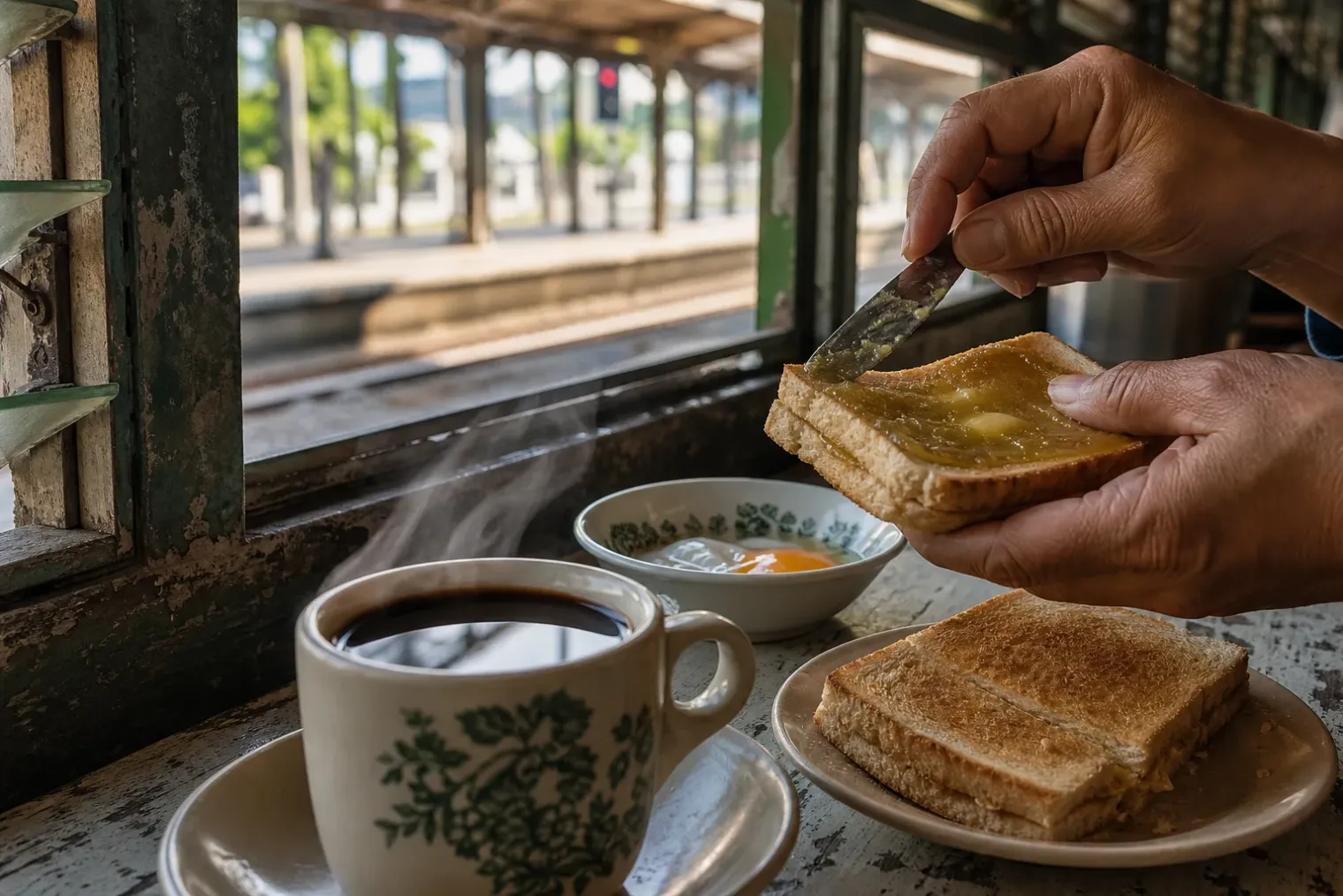
AI-generated editorial interpretation of kaya toast being prepared beside a Kluang railway platform
AI-generated editorial visual · not documentary photography

Documented story · Operating details should be checked before a visit

1938The first railway canteen

01 · The opening scene

The train moved on. Breakfast stayed.

Before Kluang Rail Coffee became a destination, it was a pause in somebody else's journey. A train pulled into a Johor town. Railway workers, soldiers and travellers stepped onto the platform. Behind the station wall, coffee darkened a cloth filter and bread met a charcoal flame.

That rhythm began in 1938, before Malaysia existed as a nation. Lim Luan Hee and Lim Heng Yong accepted an offer to operate a canteen at Kluang railway station, then an important stop on the line between Malaya and Singapore. They were feeding movement: the people who kept the railway running and those passing through it.

More than eight decades later, the simplest order still tells the story—Hainanese coffee, toast, butter and kaya. The remarkable thing is not that the menu became nostalgic. It is that an ordinary breakfast lasted long enough to become part of the place.

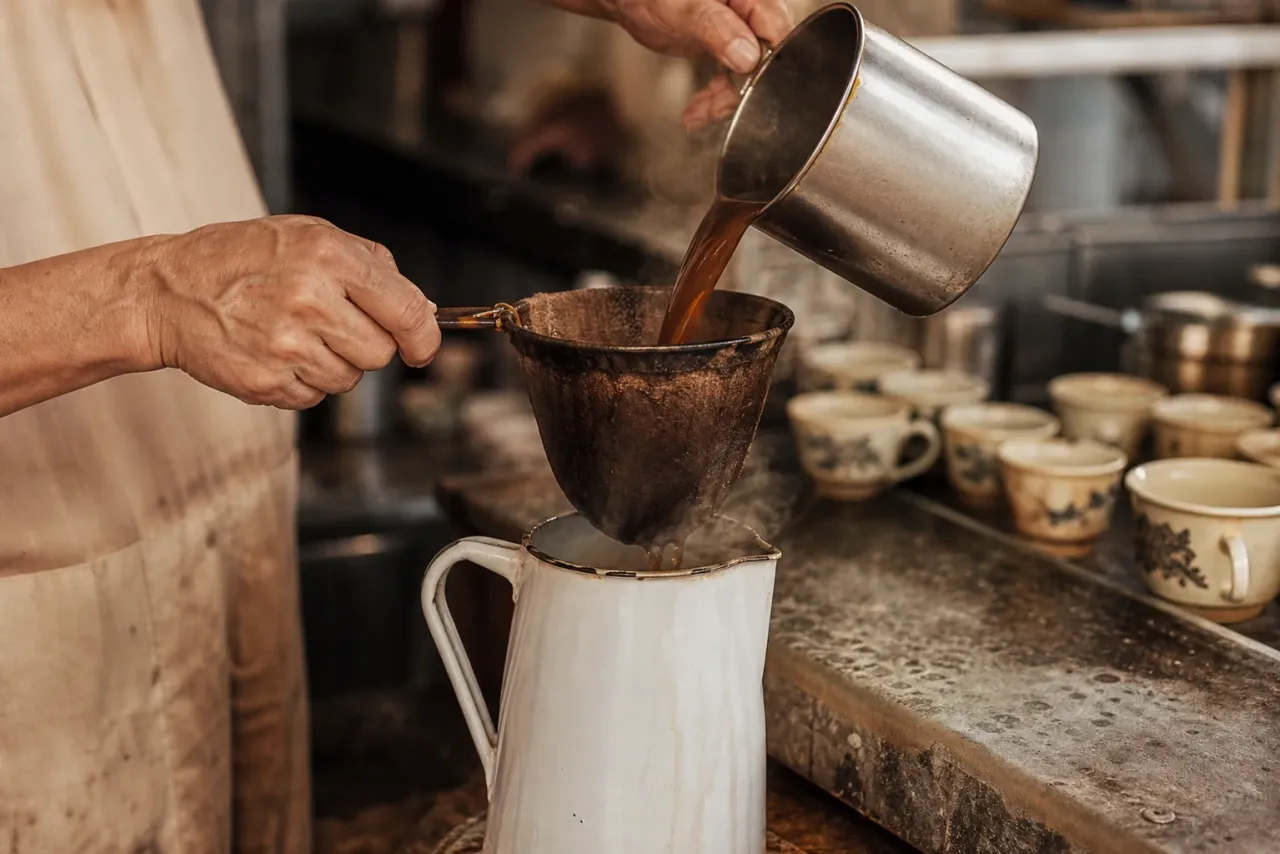
AI-generated editorial interpretation of traditional Malaysian kopi being pulled through a cloth filter at an old coffee counter
AI-generated editorial visual · not documentary photography
Opened
At Kluang railway station in 1938
Founding family
Lim Luan Hee and Lim Heng Yong
Signature
Hainanese kopi and charcoal toast
Recognition
Malaysia's oldest railway kopitiam
02

A canteen for a moving town

The railway supplied the first audience.

In the late 1930s, Kluang was gathering institutions around the tracks: a military camp, post office and the Central Electricity Board were nearby. The station connected the town to Singapore and the rest of the peninsula. A canteen there did not need to invent foot traffic; every timetable brought another table of customers.

Bernama records that the founders served British soldiers as well as railway staff and travellers. When imported fruit jam was difficult to obtain, the family made its own answer from ingredients that belonged more naturally to the region: kaya, a rich spread built from coconut milk, eggs and sugar.

The substitution outlived the shortage. Toast with kaya and butter became one of the foundations of the Malaysian kopitiam breakfast, usually joined by soft-boiled eggs and a strong cup of locally roasted coffee. At Kluang station, that combination attached itself to the sound and pace of rail travel.

The family did not set out to manufacture heritage. It made breakfast useful enough to survive.
03

A Hainanese Malaysian table

Adaptation became a cuisine of its own.

The label Hainanese can sound like a direct import, but the food tells a more Malaysian story. Hainanese migrants who found work in colonial households, hotels, ships and railway canteens learned to cook for different communities. European forms such as toast and sandwiches met coconut kaya, condensed milk and Southeast Asian coffee roasting.

Kluang Rail Coffee's signature cup belongs to that history. The beans are locally grown, according to later profiles, and the brew is paired with bread toasted over charcoal. None of the individual elements needs to be rare. Their value comes from the arrangement: familiar flavours, served quickly, in a room where the town has been arriving for generations.

For a visitor from outside Malaysia, this is the important lesson. Malaysian food is not one sealed tradition. It is a record of movement—Malay, Chinese, Indian, Indigenous and colonial histories meeting, adapting and becoming local together. The railway canteen is one place where that process can still be tasted.

What looks like a modest plate is really a map of migration, improvisation and belonging.
04

Four generations at the counter

Continuity had to be practised, not displayed.

A business can preserve old furniture and still lose the habits that gave it meaning. The Lim family's continuity sits in less photogenic work: keeping the food consistent, teaching the next generation and recognising that local regulars—not heritage tourists—kept the room alive between headlines.

Bernama's 2019 profile places Lim Ben Winn in the fourth generation. He described his father, Lim Jit Chen, taking over in the 1980s, and another relative returning from the United States around 2007 to help expand the menu and business. The family's two enduring instructions were straightforward: protect the quality and appreciate the community.

That balance matters. A heritage business cannot remain frozen if the town and its customers change, yet expansion can dissolve the thing people came for. New dishes and branches widened the audience, while the original station, old tables and core breakfast kept the brand tied to a specific origin.

Heritage survives when the next generation receives a responsibility, not merely a logo.
05

When a shop represents a town

Kluang began to recognise itself in the coffee.

The Railway Assets Corporation now describes Kluang Rail Coffee as a family heritage brand and a symbol of the town. In 2022, it received Malaysia Book of Records recognition as the country's oldest railway kopitiam. The title formalised what local memory had already decided: station and coffee shop belonged in the same sentence.

That recognition also reveals why small institutions matter to a place. Railway infrastructure can be upgraded; travel patterns can change; a town can acquire malls and chain cafés. The old canteen offers continuity across those transitions. It gives residents a shared reference point and visitors a way to understand Kluang through something more intimate than a monument.

The business has expanded beyond one platform. Public sources disagree on the exact number of generations and branches at different dates, so those figures should be treated as snapshots rather than permanent facts. What remains stable is the centre of gravity: a Johor family, a railway town and a breakfast shaped by both.

A town landmark does more than attract visitors. It gives local memory somewhere to sit.

06 · Why this story travels

The destination is a relationship.

Kluang Rail Coffee is worth knowing because it makes heritage human-sized. There is no palace gate or museum label between the visitor and the story—only a table, a cup and the knowledge that many mornings have begun in much the same way.

For Malaysia, the shop preserves a strand of Hainanese contribution and the social world of the kopitiam. For Kluang, it connects the railway that helped shape the town with the family and community that made the station feel inhabited.

Its long life should not turn every claim into legend. Branch counts, operating arrangements and generational descriptions change, and visiting details need confirmation. The enduring achievement is simpler and better documented: since 1938, a family has kept one ordinary Malaysian ritual close to the place that gave it meaning.

07 · The evidence check

What the public record shows.

Government tourism, railway and national news sources consistently document the 1938 station-canteen origin, Lim family stewardship and core Hainanese menu. Changing branch and generation counts are presented as dated snapshots, not fixed facts.

Documented milestones

  1. 01

    Bernama identifies Lim Luan Hee and Lim Heng Yong as the family members who opened the Kluang station canteen in 1938.

  2. 02

    Tourism Johor and the Railway Assets Corporation connect the original business with British soldiers, railway users, Hainanese coffee and traditional toast.

  3. 03

    Bernama's 2019 reporting documents fourth-generation family involvement and the family's emphasis on quality and local customers.

  4. 04

    The Railway Assets Corporation records Malaysia Book of Records recognition as the oldest railway kopitiam.

Details we keep qualified

  1. 01

    The current number of family generations involved; public profiles use different counting methods and dates.

  2. 02

    The current number, ownership structure and relationship of all outlets using Rail Coffee or similar names.

  3. 03

    Current access arrangements at the original station as Kluang's rail infrastructure evolves.

Plan the visit

The original setting is part of the story, but railway works, access and opening hours can change. Confirm the correct original-station outlet through current official channels before travelling. This profile is an editorial history, not a guarantee of service or product availability.

Read the Railway Assets Corporation profile ↗