Malaysian Original · Baking, migration and small-town memory

Teng Wun Bakery

Kuala Kubu Bharu, Selangor

How a baker in Kuala Kubu Bharu turned coconut kaya and layered pastry into a small-town signature that travellers carry home by the box.

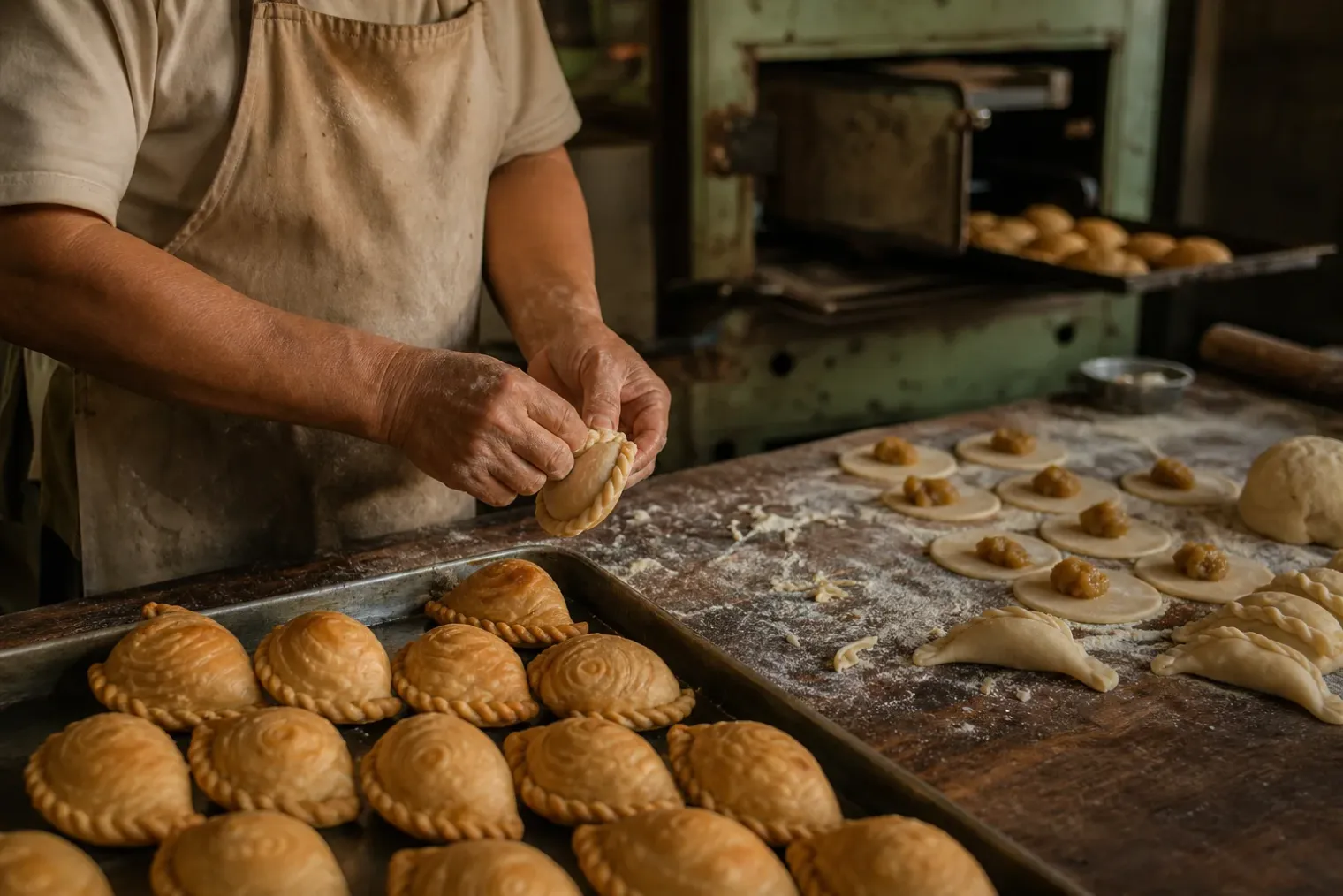
AI-generated editorial interpretation of traditional kaya puffs being made by hand in a time-worn bakery
AI-generated editorial visual · not documentary photography

Documented story · Family history relies partly on a local oral-history profile

1979A bakery takes root

01 · The opening scene

A town you can carry away in a paper box.

On a busy morning in Kuala Kubu Bharu, the queue forms before the pastries have had much time to cool. Behind the bakery's open frontage, trays move from oven to rack. Customers count kaya puffs into boxes—five, ten, sometimes many more—then carry them towards cars bound for Kuala Lumpur or the road to Fraser's Hill.

The pastry looks almost too small to bear the reputation. Its shell breaks into buttery layers. Inside is kaya, the coconut-and-egg spread better known on toast. Teng Wun Bakery made that familiar Malaysian flavour portable, and the town gradually claimed the result as one of its own signatures.

But the fuller story begins before the queue, in 1979, when a husband and wife divided a rented shop front between two kinds of work. One side became a salon. On the other, Hoo Jee Suan baked bread and cakes to make a living.

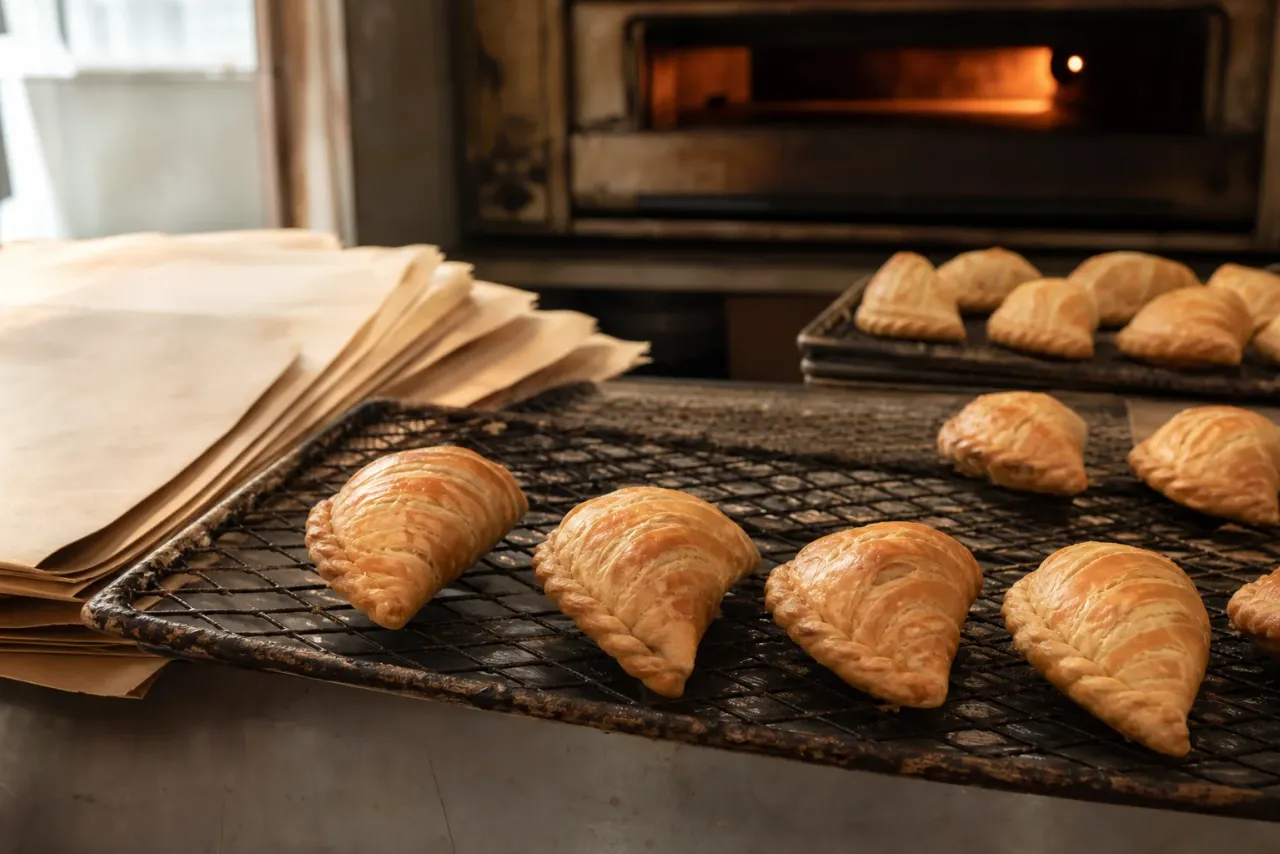
AI-generated editorial interpretation of freshly baked kaya puffs cooling on old wire racks in a modest bakery
AI-generated editorial visual · not documentary photography
Opened
In a Kuala Kubu Bharu shop lot in 1979
Baker
Hoo Jee Suan
Signature
Handmade kaya puffs
Town
A planned Selangor centre rebuilt after floods
02

One shop, two livelihoods

The bakery began with practical courage.

A 2019 local oral-history profile by UNI Production records the early arrangement: Hoo Jee Suan and his wife leased the premises and split the front. Mrs Hoo ran a women's salon; Mr Hoo baked. In the beginning, the ovens produced cakes and bread rather than the pastry that would make the name travel.

The account places Hoo's childhood across Hainan and Malaya. He had spent part of his youth in China and journeyed south as a boy when his family's circumstances became difficult. That migration history matters, but it should not be polished into a simple triumph. The documented theme is practicality: learn a trade, make what people need and build stability through daily work.

Kuala Kubu Bharu was a fitting place for that kind of beginning. The present town had itself been planned and rebuilt after floods destroyed the old administrative centre. Its compact streets, civic buildings and shop houses gave small businesses room to become landmarks.

Before the kaya puff became a town emblem, the bakery was simply one family's way of making a life.
03

The pastry finds its form

Kaya stepped out from between the toast.

According to the same family profile, Hoo learned an earlier version of the kaya puff from his father-in-law, who operated a Hainanese coffee shop. He adjusted it until the crisp, fragrant version associated with Teng Wun emerged. Other food writing has described the pastry as a response to nearby kopitiams already serving kaya toast, though that origin story remains less firmly documented.

The idea is elegantly local. Kaya already sat at the centre of Malaysian breakfast culture: coconut milk, egg and sugar cooked into a custard-like spread, often perfumed with pandan. Folding it into layered pastry turned a table-bound ritual into something that could be held, shared and taken home.

That portability changed the scale of the bakery without requiring an industrial product. The puff could leave Kuala Kubu Bharu while still pointing back to it. Visitors began to treat the box not merely as food for the drive, but as proof that they had stopped in town.

A familiar spread became a pastry, and a pastry became directions to a town.
04

Repetition becomes reputation

The queue was earned one tray at a time.

Tourism Selangor describes Teng Wun as a bakery with more than four decades of history, known for homemade kaya puffs, tarts and cakes. Its food directories note customers waiting before opening. Those descriptions capture the public reputation, but the more meaningful measure is the repetition behind it: dough rolled, filling portioned, edges closed, oven watched, tray replaced.

Freshness is part of the experience. Independent visitors repeatedly describe pastries leaving the oven while people wait. That immediacy separates the bakery from a souvenir designed for a shelf. It asks the traveller to encounter the working shop and the people making the product—not only its packaging.

The broader menu matters too. Sponge cakes, cupcakes, tarts and seasonal durian cake show an old-style local bakery responding to everyday celebrations and changing tastes. Tourism Selangor says the seasonal cake uses fresh durian from nearby Batang Kali, extending the story from one shop into the surrounding district.

A heritage bakery is not preserved by age alone. Every fresh tray has to make the case again.
05

A small business shapes the map

The stop became part of the journey.

Kuala Kubu Bharu often appears in travel plans as a gateway—to hiking trails, river activities or the climb towards Fraser's Hill. Teng Wun reverses that logic. It gives people a reason to enter the town centre, walk its streets and leave with something made there.

The kaya puff has even appeared in local mural imagery, evidence that residents and tourism storytellers recognise it as more than a popular snack. Food becomes civic shorthand: say the pastry and people picture the town; see the town and somebody tells you where to buy the pastry.

That relationship is valuable precisely because it remains modest. Teng Wun does not need to represent every Malaysian bakery or claim invention beyond the evidence. Its contribution is more grounded. A family's working recipe has helped one small Selangor town feel specific, memorable and worth slowing down for.

The best local souvenirs do not borrow a place's name. They give the place another meaning.

06 · Why this story travels

Smallness is part of the achievement.

Teng Wun Bakery is worth shouting about without turning it into a myth. Its power lies in scale: one family, one working shop, one pastry whose flavour is immediately legible to Malaysians and newly discoverable to everyone else.

For an international reader, the kaya puff opens several doors at once—to Hainanese migration, Malaysia's shared kopitiam culture, the reinvention of coconut kaya and the role small businesses play in giving a town emotional geography.

The historical record is thinner than it is for a national brand, and some family details come from a single oral-history feature. We keep that limitation visible. What multiple tourism and local sources do establish is enough: for decades, people have travelled to Kuala Kubu Bharu, waited for the trays and carried the town away by the box.

07 · The evidence check

What the public record shows.

Tourism Selangor consistently documents Teng Wun's long history, location and signature products. A detailed 2019 local oral-history profile supplies the 1979 beginning and family account, which we attribute rather than treat as independently verified biography.

Documented details

  1. 01

    Tourism Selangor describes Teng Wun as a Kuala Kubu Bharu bakery with more than four decades of history, known for kaya puffs, tarts and cakes.

  2. 02

    Tourism Selangor food directories identify 15 Jalan Dato Muda Jaafar and describe customers queueing for the kaya puffs.

  3. 03

    A 2019 UNI Production profile names Hoo Jee Suan, dates the rented-shop beginning to 1979 and describes the salon-and-bakery arrangement.

  4. 04

    The same family profile says the kaya-puff method was learned from Hoo's father-in-law and refined over time.

Stories we do not overstate

  1. 01

    The often-repeated claim that Teng Wun invented the kaya puff; available public evidence supports association and adaptation more strongly than sole invention.

  2. 02

    A fully independent account of Hoo Jee Suan's migration and early family history beyond the local oral-history profile.

  3. 03

    Current ownership, production volume, opening hours and product availability, all of which may change.

Plan the visit

Opening hours, prices and pastry availability can change, and popular items may sell out. Confirm current details directly before travelling. Buy what you will enjoy; the story is the working bakery and its relationship with Kuala Kubu Bharu, not a checklist purchase.

Check the bakery's current updates ↗