Malaysian Original · Tea, landscape and identity

BOH Tea: How Cameron Highlands Entered Malaysia's Daily Ritual

Cameron Highlands, Pahang

How a highland plantation founded in 1929 became a Malaysian tea ritual—and why the beauty of its Cameron Highlands landscape deserves an honest history.

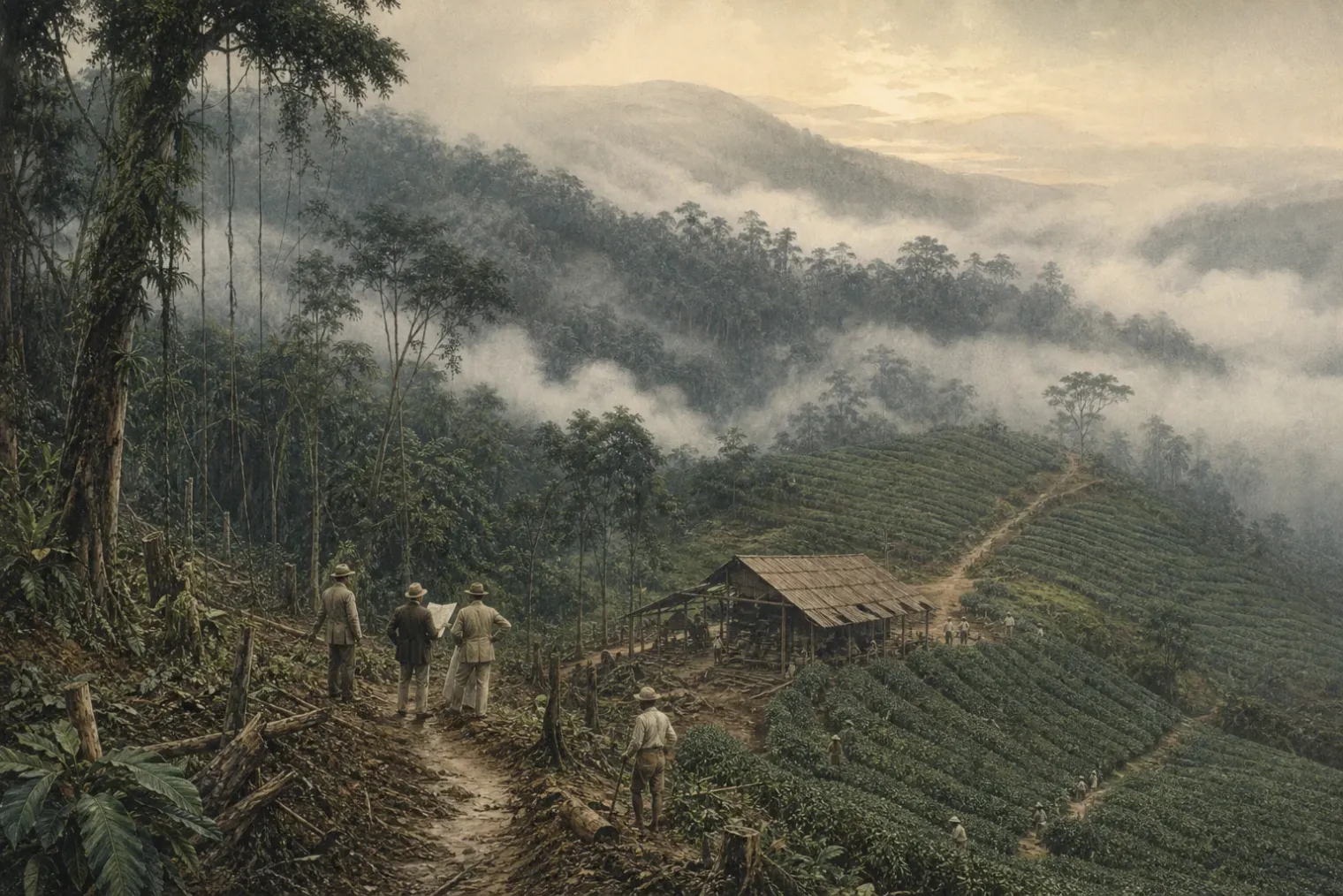
AI-generated editorial interpretation of an early Cameron Highlands tea plantation where forest gives way to cultivated rows
AI-generated editorial visual · not documentary photography

Documented story · Sustainability claims remain attributed

1929First highland tea garden

01 · The opening scene

A familiar cup begins with a changed hillside.

From a Cameron Highlands viewpoint, rows of tea appear to follow the land as if they have always belonged there. The curves are green, orderly and deeply associated with Malaysia. They are also the result of deliberate transformation.

BOH's own history says that in 1929, during the Great Depression, British-born entrepreneur John Archibald Russell and tea planter A.B. Milne turned virgin jungle terrain into the country's first highland tea garden. The enterprise created work and a lasting crop, but it did not discover an untouched tea landscape. It made one.

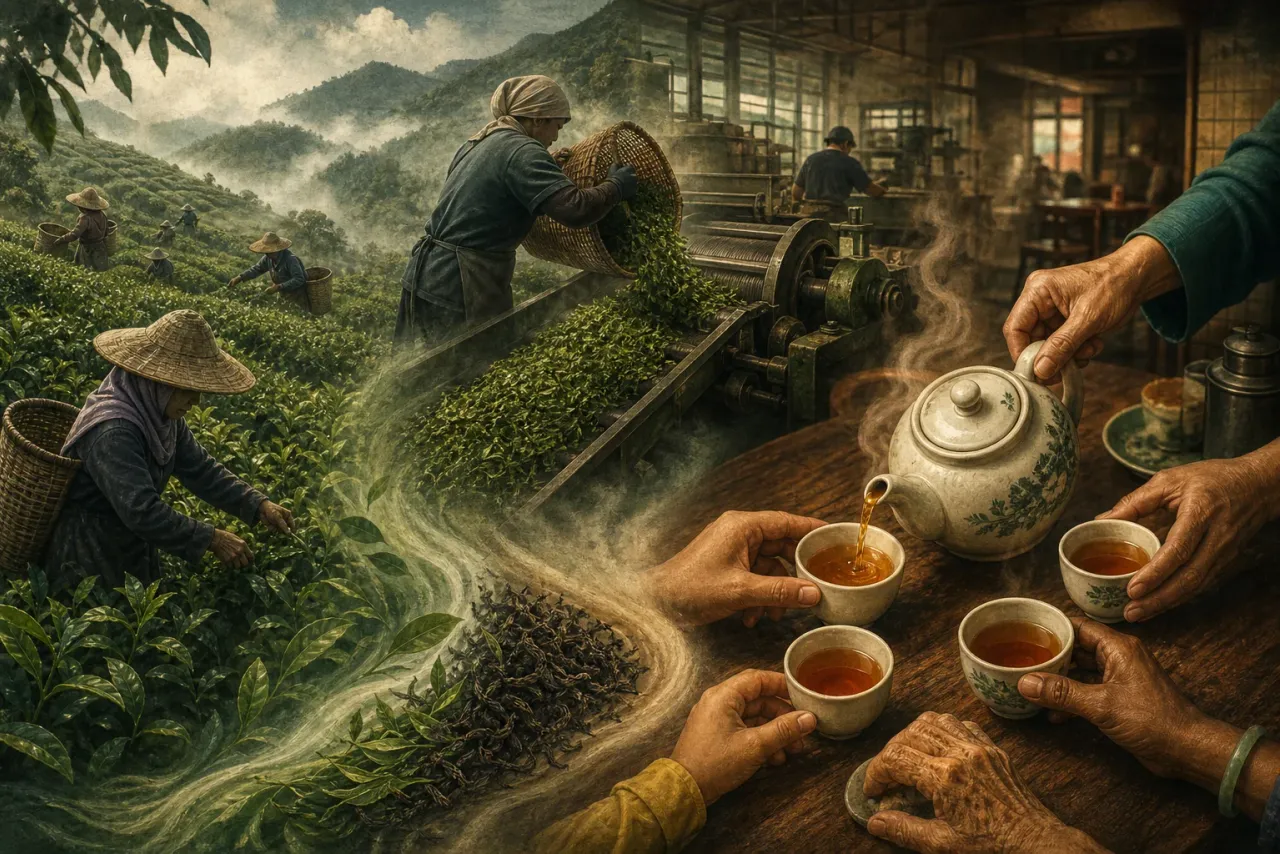
Nearly a century later, Malaysians pour the result at breakfast tables, kopitiams, offices and family gatherings. The story between those two images—the cleared slope and the shared cup—is where BOH became a Malaysian original.

AI-generated editorial interpretation of Malaysian tea moving from highland workers and factory machinery to a shared table
AI-generated editorial visual · not documentary photography
Founded
Cameron Highlands, 1929
Founder
J.A. “Archie” Russell
Model
Tea grown, processed and packed in Malaysia
Today
A fourth-generation family enterprise
02

The first garden

A depression-era bet remade a highland valley.

Archie Russell arrived in Malaya as a young man and moved through mining, rubber and construction before tea. When the colonial government opened Cameron Highlands to agriculture, he partnered with A.B. Milne, an experienced planter from Ceylon, now Sri Lanka. BOH dates their first garden to 1929.

The timing was difficult. Commodity markets were contracting during the Great Depression, and the remote highlands demanded roads, drainage, factories and a workforce as well as tea bushes. BOH's corporate history remembers the venture as perseverance. It also records, unusually plainly, that jungle terrain was transformed for the plantation.

What the accessible public record says far less about is the workforce that performed and sustained that transformation. A plantation history told only through founders and hectares is incomplete. The missing names, recruitment routes, working conditions and community lives are not a reason to abandon the story; they are a reason to mark where more work is needed.

The tea garden is cultural heritage and an altered ecosystem at the same time.
03

Survival and succession

The business outlived its founder, occupation and empire.

Archie Russell died in 1933, only a few years after planting began. BOH's account credits his widow, Kathleen, with keeping the enterprise together while their son Tristan was still young. During the Japanese occupation of Malaya, the plantation was abandoned and its machinery damaged.

Tristan later returned, rebuilt operations and expanded the company. The founding family did not leave when Malaya became independent in 1957. BOH says the later Russells came to identify themselves with the country; Caroline Russell, Tristan's daughter and the company's chief executive since 2003, describes herself as a Malaysian citizen born in Kuala Lumpur.

That evolution does not erase the company's colonial beginning. It explains how identity can change through residence, responsibility and generations. BOH became Malaysian not through a single legal or advertising moment, but through the long and still-testable work of operating inside the nation's economy and culture.

Belonging is more convincing when the complicated beginning remains in the frame.
04

Bush to cup

The plantation learned to speak as a Malaysian brand.

BOH describes itself as vertically integrated: tea moves from bush to processing, blending, packing and distribution within one enterprise. That connection between landscape and packet gave the company a story few imported brands could tell. The tea was not merely sold in Malaysia; it was grown and made here.

Manufacturing alone did not create affection. BOH entered Malaysian popular culture through Mr BOH, the long-running “Ummph” expression and later support for music, theatre and the arts. The Edge described the brand as having grown alongside the country, shifting its public voice while retaining the highland origin at its centre.

The result is larger than a logo. Tea in Malaysia passes through many traditions—British, Chinese, Indian, Malay and mamak among them. BOH did not create those cultures, but a locally grown packet could sit among them. The shared act of making tea helped the plantation's output become part of daily national life.

A crop becomes a local institution when people stop thinking of it as somebody else's import.
05

The view and the responsibility

Beauty creates an obligation to measure what it costs.

BOH's rolling fields now help define the visual identity of Cameron Highlands and draw visitors into the region. Tourism gives more people a direct connection to where tea is made. It can also encourage a simplified story in which every green slope is treated as nature rather than agriculture.

The company publishes initiatives covering agricultural certification, energy, packaging and a rainforest-conservation collaboration. Those programmes are useful evidence of intent and activity, but most available detail comes from BOH or its partners. It does not yet provide a complete, independently verified picture of habitat outcomes, carbon reductions, worker wellbeing or the cumulative effects of tourism and farming.

A mature Malaysian original should be able to carry both pride and scrutiny. BOH can be celebrated for making highland tea part of national life while still being asked to publish clearer outcome data and a fuller social history of the people whose hands move the leaves from bush to cup.

The more iconic the landscape becomes, the stronger the duty to explain how it is cared for.

06 · Why the world should know it

A Malaysian ritual grew from a complicated inheritance.

BOH Tea is worth knowing beyond Malaysia because it refuses an easy category. It is a colonial-era plantation and a Malaysian household brand; a dramatic green landscape and an industrial farm; a family inheritance and a national ritual shared by people far beyond that family.

For an international reader, the cup offers a way into Malaysian history that is both ordinary and layered. It connects empire, migration, agriculture, manufacturing, independence, advertising and tourism without requiring the contradictions to disappear.

The best long-term version of the story will include stronger independent environmental evidence and more voices from plantation communities. Until then, BOH remains worth shouting about—with affection for what Malaysians made of it and honesty about the land and labour that made it possible.

07 · The evidence check

What the public record shows.

BOH's dated company history, an independent trade interview with Caroline Russell and Malaysian business reporting establish the founding, family succession and brand's cultural evolution. Environmental programmes are identified as company or partner claims where independent outcome data is not public.

Documented milestones

  1. 01

    BOH's official history dates the first Cameron Highlands tea garden to 1929 and names J.A. Russell and A.B. Milne as its founders.

  2. 02

    The same history explicitly describes virgin jungle terrain being transformed and records founder death, wartime disruption and later family succession.

  3. 03

    World Tea News documents Caroline Russell's Kuala Lumpur birth, Malaysian citizenship, entry into the company in 1988 and appointment as chief executive in 2003.

  4. 04

    The Edge documents BOH's Malaysian advertising and cultural programmes, including Mr BOH, “Ummph” and support for the arts.

Claims and gaps we keep visible

  1. 01

    A fuller worker-led social history, including recruitment, living conditions, mobility and the contributions of plantation communities across generations.

  2. 02

    Independently verified, time-series outcomes for habitat, emissions, soil, water, packaging and biodiversity rather than programme descriptions alone.

  3. 03

    Current plantation area, production and export figures presented consistently across audited or independently checked sources.

Follow the story

This is an editorial history, not a product endorsement. BOH's sustainability initiatives are attributed to the company or its partners where independent outcome data is not publicly available. Visitors to working tea estates should follow access rules and treat cultivated slopes as farms, not open wilderness.

Visit BOH Tea's official website ↗